Jennifer Ewbank wrote a piece this week about intuition, the field-forged kind, and why we're losing it in the age of algorithms. Go read it. Her argument, badly compressed: intuition isn't magic, it's pattern recognition built from years of consequential encounters, running below conscious thought. It atrophies like any unused muscle. And leaders who outsource every judgment to a dashboard are disabling a sense they'll need on the day the data runs out.
I've been circling the same problem from a different direction for about a year now, and her article gave me the shove to say some of it out loud. Fair warning: I'm going to talk about cowboys.
Some background on me, for those who don't know: seventeen years in uniform, Air Force then Army, a fair amount of it doing work where "we own the night" was not a slogan. It was the whole advantage. What Jennifer calls intuition we called situational awareness, or pattern of life, or just the hair standing up on your neck. Different vocabulary, same machinery. Reps with real stakes, compressed into a feeling that shows up before the analysis does. So when she says the gut is trainable and perishable, I believe her, because I've watched it trained and I've watched it perish. Nobody's instincts rot while they're being tested. They rot while something else is answering for them.
Now the cowboys.
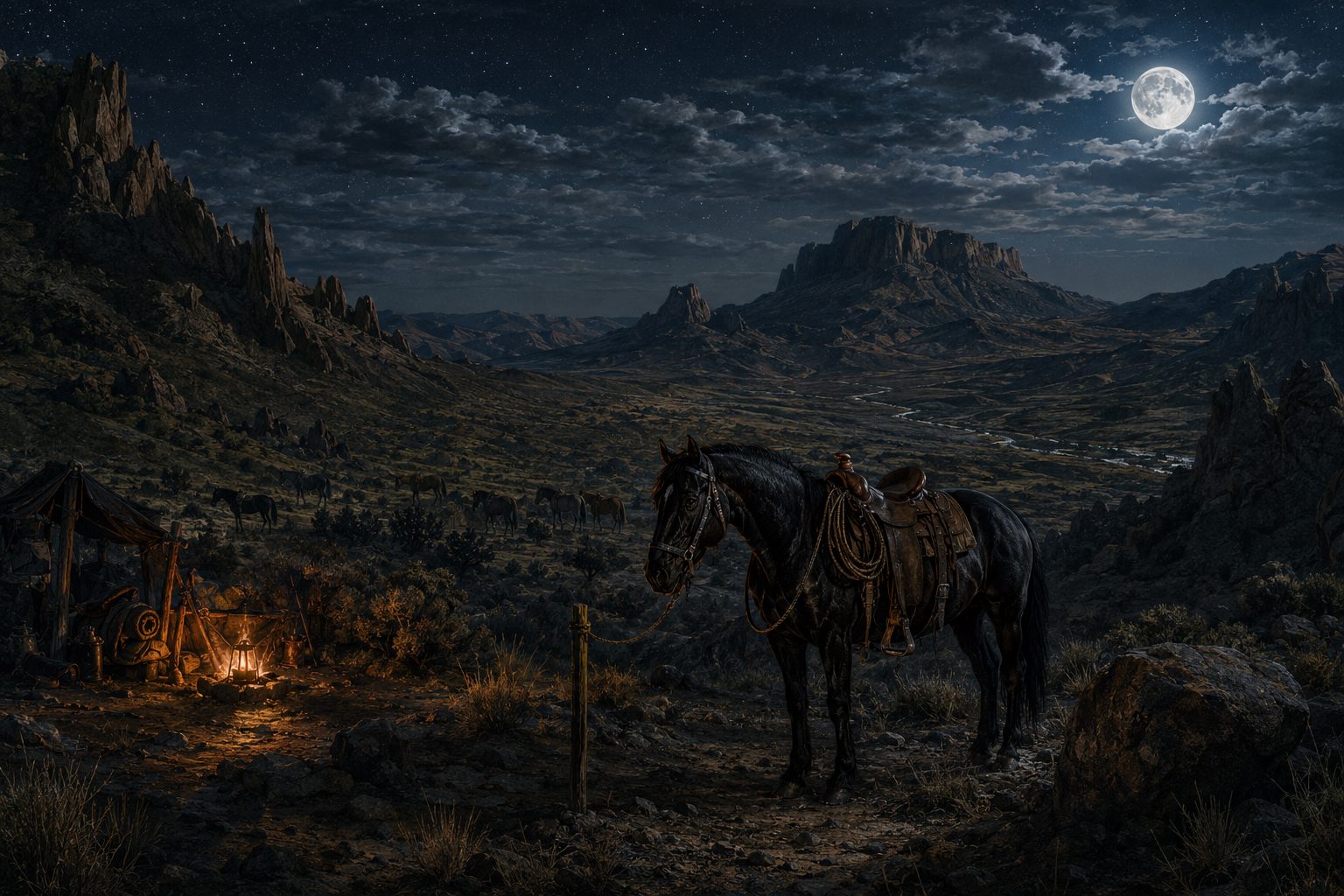
On the old trail drives every hand kept a string of six to ten horses, and one of them was the night horse. Best animal in the string, and deliberately held out of daytime work. While the rest of the remuda ran loose after dark, the night horse stayed picketed by camp, saddled or close to it, because if the herd stampeded at two in the morning a man had seconds to be mounted and riding hard over ground he could not see. He galloped blind and trusted the horse's eyes. That was the whole deal. The horse perceived and moved. The rider decided where, and why.
I've started calling our current situation the nighthorse problem, because every one of us is being handed instruments that genuinely see better than we do in certain kinds of dark. The question Jennifer's article raises is the right one: what does the rider still have to be able to do?
Here's where I'd push on her framing a little, and I mean push the way you push on a good idea, to see what it can carry.
She draws the line as intuition versus algorithm. I don't think that line survives her own definition. Pattern recognition trained on experience, producing outputs you can't fully inspect or explain: that IS an algorithm. Read her section on where intuition fails. It encodes the biases of its training. It can be gamed by an adversary who studies its surface. It doesn't transfer between domains. It goes stale when the world drifts. She has, maybe without meaning to, written the cleanest short critique of machine learning I've read this year. Which tells me the real picture isn't gut versus machine. It's a rider with two horses in the string, both pattern-matchers, trained on different ground. One trained on a career of consequential human encounters. One trained on a vast corpus with no stakes at all. The skill that can't be delegated is knowing which one was trained for the ground you're on tonight. Across a table from another human being: her gut wins, full stop, and no database is coming for that. Estimating base rates in a domain where your own experience is thin: riding the gut there isn't courage, it's just favoring the poorly-trained model because it happens to live in your body. I say this as someone who has made exactly that mistake, more than once, at cost.
The second thing worries me more. Jennifer's warning is about substitution, the executive who overrides his unease because the analytics said otherwise. Real, but visible, and visible problems get managed. The quieter problem is upstream: the instrument no longer waits to be consulted at the decision point. It frames the situation before you've formed an impression at all. The summary you read before the meeting. The brief that told you what to notice. The search results that defined your options. By the time your gut speaks, it's reacting to a scene that was staged for it, and intuition is uniquely vulnerable to staged inputs precisely because it can't tell you which cues it's using. Her own story about the walk-in who tried to lure her into a trap makes the point from the human side. His whole method was manufacturing the surface her assessment would consume, and what saved her was a second-order read: too smooth, too rehearsed. So here's the one practice I'd add to her list, and it's cheap: write down what you think before the instrument speaks. Before the briefing, before the summary, before you ask the model. It's the only way I know to tell the difference, afterward, between a view that was informed and a view that was installed. I do this inconsistently. When I skip it, I can't reconstruct what I believed an hour earlier, and that should scare me more than it does.
Last thing, borrowed from her own sources. When Gary Klein and Daniel Kahneman finally sat down together to fight about this, they mostly failed to disagree. Trustworthy intuition, they concluded, needs two conditions: a domain with stable regularities, and long practice with fast, honest feedback. Jennifer's world had both. The case pans out or it burns you, and either way you learn. Firefighters, same. ICU nurses, same. A lot of executive life has neither. The feedback is slow, muddy, or never comes, and the confidence you feel there tells you nothing about your accuracy. On the trail, not every horse earned night work. The job was earned ride by ride, by performance somebody actually verified. Feeling surefooted was never the test.
Keep the gut in training. Jennifer's right about that and right about how. It's the last sensor that can't be jammed remotely, and the only faculty that can evaluate the horse at all. But the fuller discipline, I think, goes: know which instrument was trained for tonight's ground, put your own read on paper before either one speaks, and keep the reins. The horse sees. The rider decides where, and why.
Grateful to Jennifer for taking this into the open. It needs more riders.